Bring the pressure. Work the map.
You already know the feeling. The team keeps moving, the calendar stays full, the dashboard has plenty of color, and the same hard thing keeps walking back into the day.
The studio starts there. Send the plain version: supplier, invoice, customer, deadline, file, queue, tool, team habit, or stuck call. The rough parts usually carry the signal.
Then we catch the signal, map the pressure, and work the move until it has handles: one clean read, one owner, one next step, one bad path avoided.
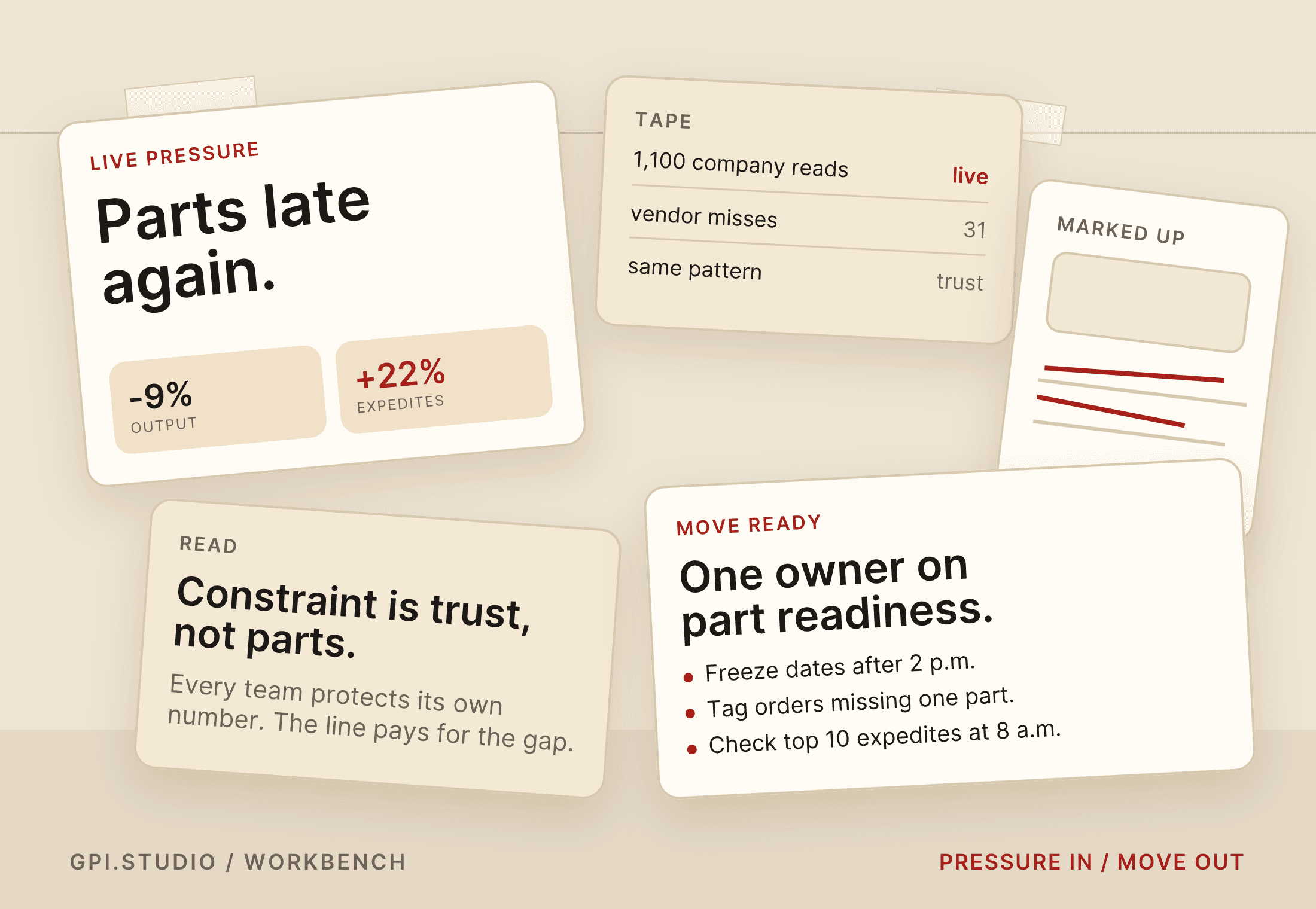
Signal, map, move. Same floor, three reps.
Catch the signal
Start with the repeat pain: slow call, protected miss, bad handoff, customer drag, vendor fog, or team habit.
Map the pressure
Put the path, owner, wait, cost, old promise, and tradeoff where everyone can point at the same thing.
Work the move
Turn the read into a memo, map, source packet, stop sign, or next step small enough to use this week.
Start where the work keeps spending energy.
Signal is the first rep. It points to the part of the system carrying the most drag: decision latency, error correction, knowledge location, talent flow, structural lock-in, capital intensity, or knowledge velocity.
Use it when the pressure is real but the name is fuzzy. The score helps you see where to start before the work gets turned into another broad discussion.
Find the signalA map gives the team something real to point at.
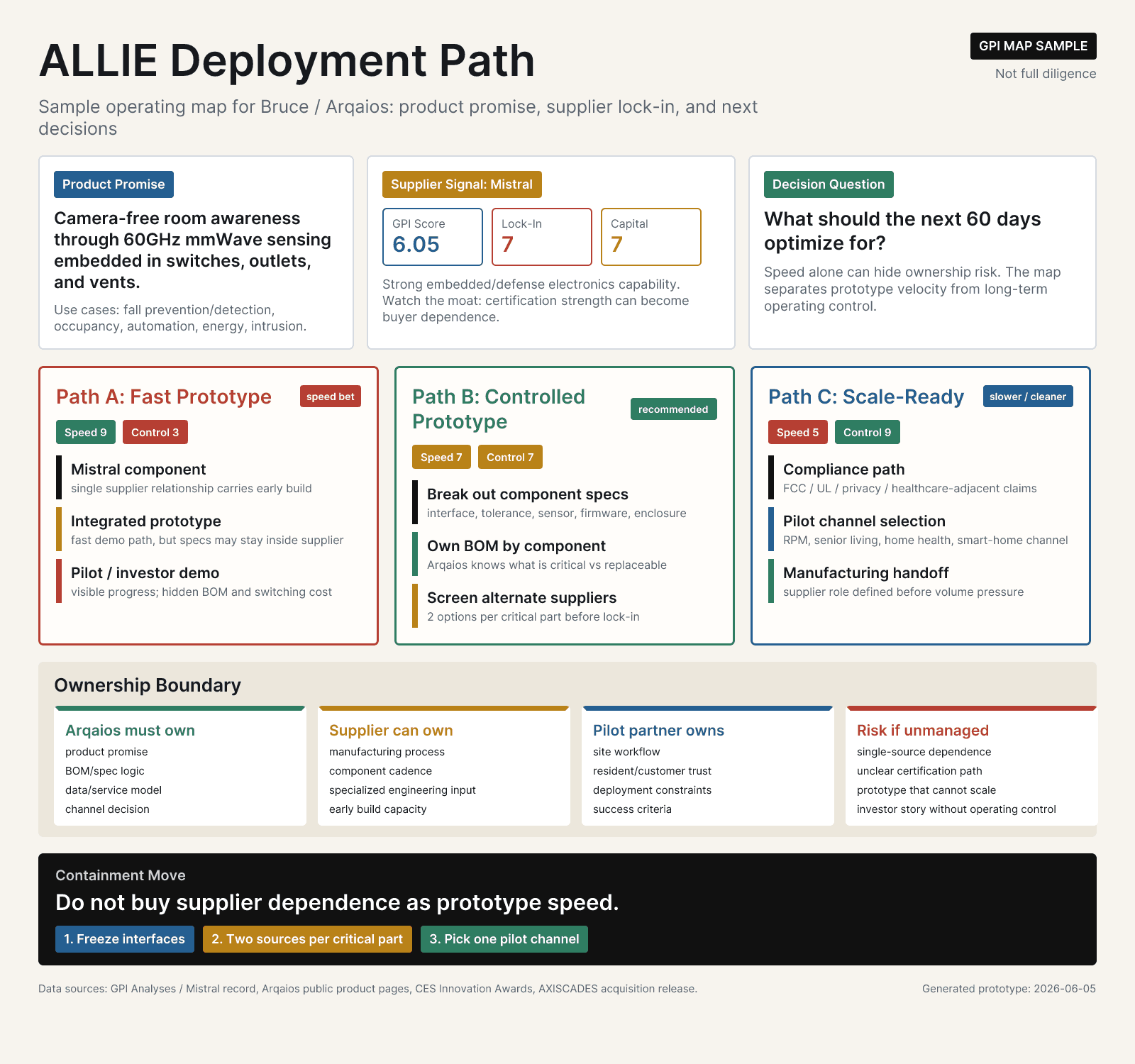
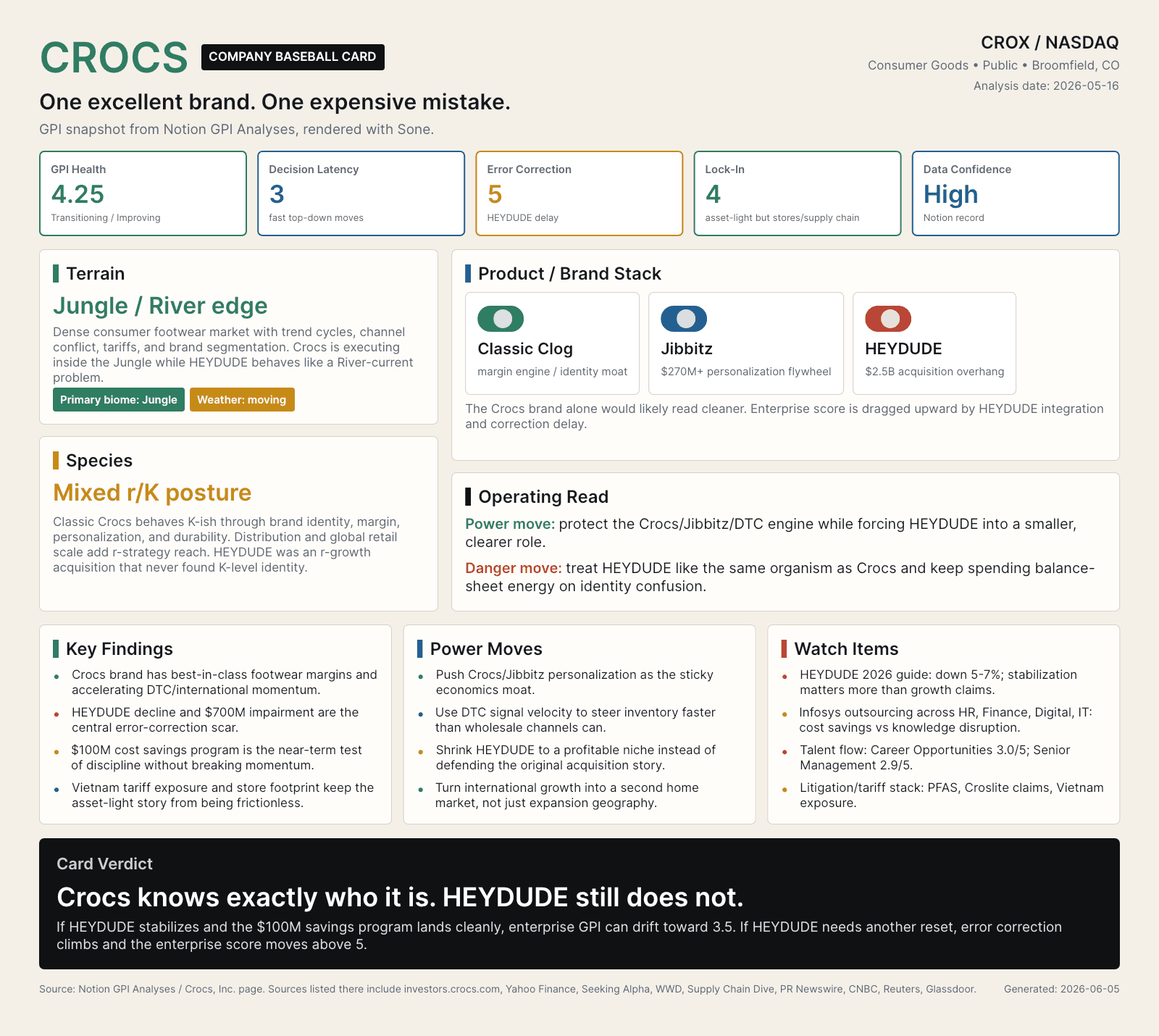
| Path / timeline | The real route of the work, the waits, and the gates carrying the decision. |
|---|---|
| Dependency / ownership map | Who controls what, who waits on whom, and which handoff can get expensive. |
| Company card | A compact read on terrain, pressure, useful moves, danger moves, and what to watch next. |
| Decision tree | The branch logic, consequences, and stop points to name before the choice hardens. |
Usable output beats a heavy deck.
| Pressure read | What keeps repeating, where the energy leak sits, and why the surface story feels too clean. |
|---|---|
| Signal map | The path, owner, constraint, and risk laid out so the team can argue with the same evidence. |
| Next move | One useful move, one owner, one test, and one path to avoid before the week gets away. |
| Language | A cleaner way to name the issue so Monday morning skips the same debate. |